

How to detect sperm at home?
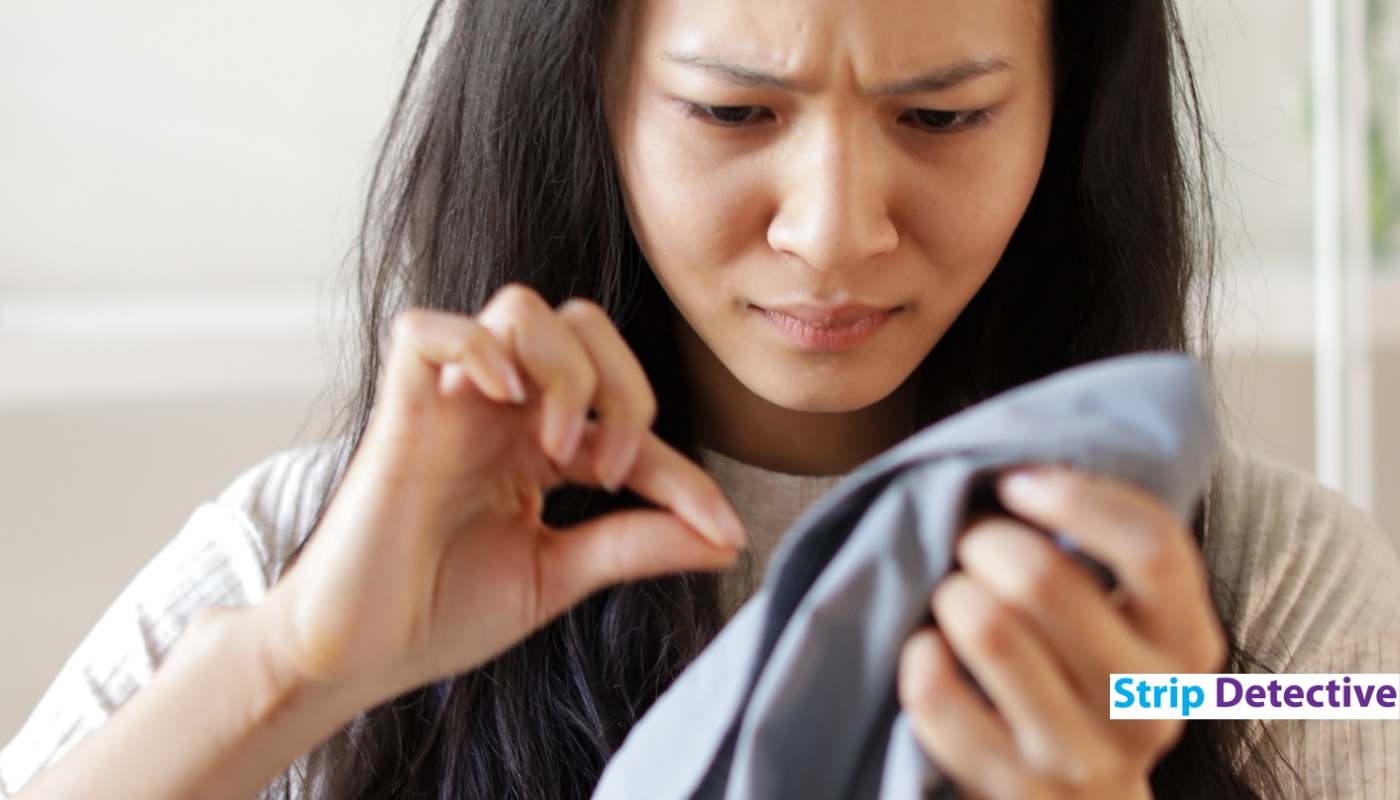
Detecting traces of semen may be needed in a variety of situations – for legal or personal matters that we are uncomfortable with – for example, if we want to check if a child or partner is sexually active. There are several methods of performing a semen test, some of which we can complete ourselves, at home.
Method of searching for biological traces on materials using a UV (ultraviolet) lamp
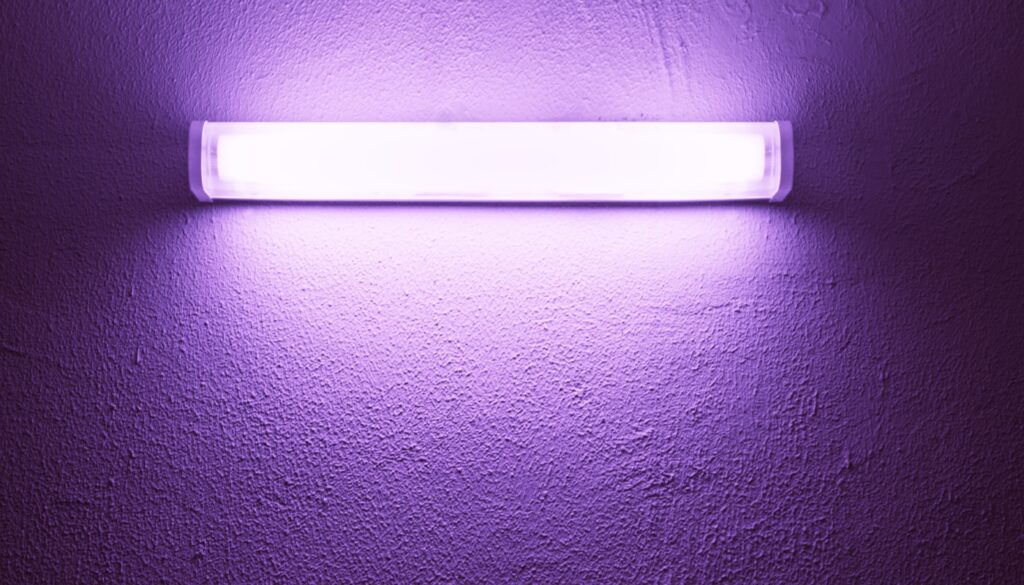
Why is semen detection with a UV lamp a recommended method?
Semen contains proteins and enzymes that will fluoresce under ultraviolet light. Biological fluids, including semen, often glow a pale blue or whitish light under a UV lamp. This is often the initial method of visual inspection of material in police and forensic laboratories, as it helps to secure a suitable piece of material for further examination.
Why does semen glow in the ultraviolet?
There are numerous proteins (albumins and enzymes) and organic compounds in the composition of the sperm. Flavins such as FAD or FMN or from the proteins tryptophan, tyrosine and phenylalanine are mainly responsible for the luminescence.
It should be noted, however, that detergents and other proteins can also glow, so the UV light test method should only be part of the test for the presence of semen. If one lists only human substances that can glow under UV light, these would be: saliva, sweat, milk, skin, bones, tendons (skin, bones, tendons have a lot of collagen).
Directions for use
- Use a UV lamp with a wavelength of 365-395 nm
- Darken the room
- Scan the surface with the lamp from a distance of 15-30 cm
- Look for pale blue or whitish spots, if you find them – secure the material for further study. You can mark it, for example, by wrapping it with a rubber band or sticking pins around it
Limitations associated with semen testing under UV light:
- This method has low specificity – many substances glow under UV light (e.g. detergents, some fabrics, other body fluids will glow under this light)
- Very old stains may not shine under the lamp
- The method indicates the presence of organic matter, but does not confirm that it is semen and requires a complementary method
Semen detection test – Strip Detective
Characteristics
Strip Detective is a highly sensitive, commercial test for the detection of acid phosphatase – an enzyme present in semen at very high concentrations. The acid phosphatase detection method is also a procedure used by law enforcement agencies around the world, as it allows material to be ruled out as not containing sperm. If the stick does not react with staining, DNA testing is no longer necessary.
Directions for use
- Moisten the stain with water using an atomiser bottle (old stains should be moistened firmly, fresh damp stains do not need to be moistened)
- Apply the test to the suspect surface
- Wait 2 minutes and check the result
Advantages and limitations of the test
Pros:
- This test is specific for semen and is not used to type other biological substances, so it can confirm with much greater precision than a UV lamp whether a stain is semen.
- It is easy to use
- Gives a quick result
- Does not destroy the biological trace – can be further investigated, DNA determined or laboratory analysis performed
- A negative test basically lets you know that there is no semen in the material being tested
- On a per item basis, it costs £29 to test one trace
Limitations:
- It can detect animal semen or bacteria, including, in rare cases, bacteria in the female reproductive tract, for which reason a positive result requires confirmation in the laboratory. If bacteria in the genital tract show a positive result, it will usually be in the middle of the colour scale.
- The test requires an online order, it cannot be purchased in-store
Other home methods
Water test
Semen forms sticky threads when it comes into contact with water. To assess whether a material contains semen – it is possible to wet the material with water and observe it. However, this method is imprecise and renders the test material unsuitable for further analysis due to excessive dilution with water.
Appearance features
The fresh seed has a characteristic texture, smell and colour. When it dries, it leaves a stiff, scaly residue. However, it can be confused with another biological substance, with discharge, plasma or saliva.
Accuracy of household methods in detecting traces of sperm
None of the home methods can give 100% certainty of confirming the presence of sperm. Professional laboratory tests are the most reliable. We recommend the Strip Detective test as a pre-test. If the test excludes the presence of sperm (the stick does not turn purple) – you can conclude that the stain did not contain sperm. If the result is positive – it is advisable to send the material for DNA analysis at an accredited laboratory where a double test will be performed, including an acid phosphatase test and a colorimetric test or a DNA test with sex determination or DNA profiling.
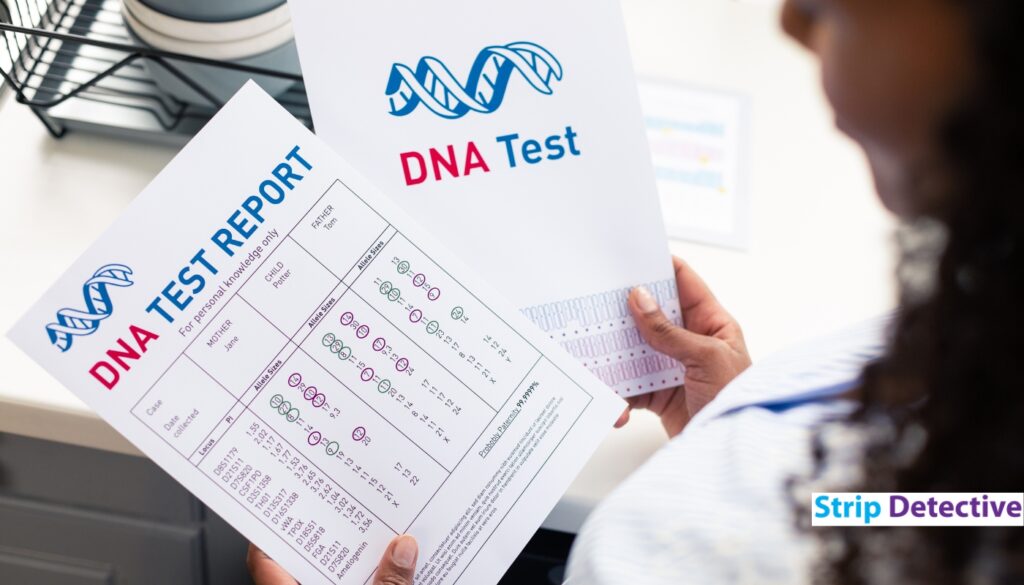
Professional laboratory tests include:
- Visual inspection and identification of the test material
- Immunoenzymatic tests
- Report of the test performed, together with the result and interpretation
- May include DNA analysis (also comparative)
Factors influencing the detectability of semen:
- Time: fresh samples are easier to detect, but long-term semen can also be detected
- Concentration: diluted stains are more difficult to analyse, but Strip Detective will even detect semen at a concentration of 1:500
- Surface: porous materials make it difficult to detect sperm
- Temperature: high temperature degrades proteins, if your material has been above 26 degrees celsius or below 0 degrees celsius, sperm proteins can degrade
- Humidity: reduces the fluorescence of the material
Legal aspects
In the case of tests of a legal nature, tests performed by authorised bodies are necessary. Only such tests have evidential value and can be used in court.
Summary
Home semen detection methods can be useful as initial tests, but have limited reliability. A combination of UV and Strip Detective test increases the accuracy of results, but full confirmation requires laboratory testing. Home results should not be the basis for legal or personal decisions.